
Questions · Leaks and pipes
What should my water pressure be?
Household fixtures are built for roughly 40 to 80 psi, and plumbing code calls for a pressure regulator once static pressure goes above 80. You can check it yourself with a gauge on an outside hose bib. High pressure is quiet, constant damage, and it is one of the cheapest faults to fix.
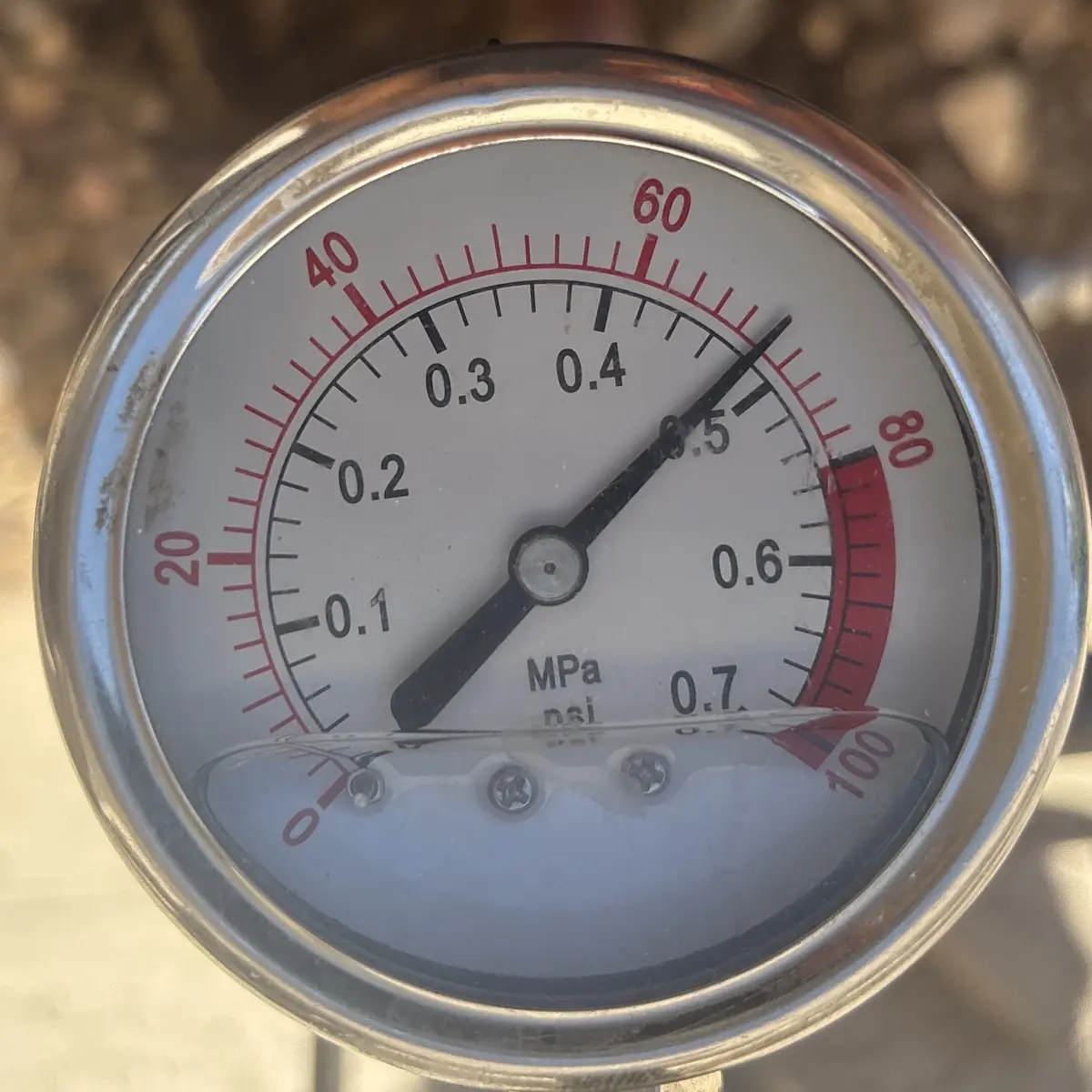
How to measure it
- 01
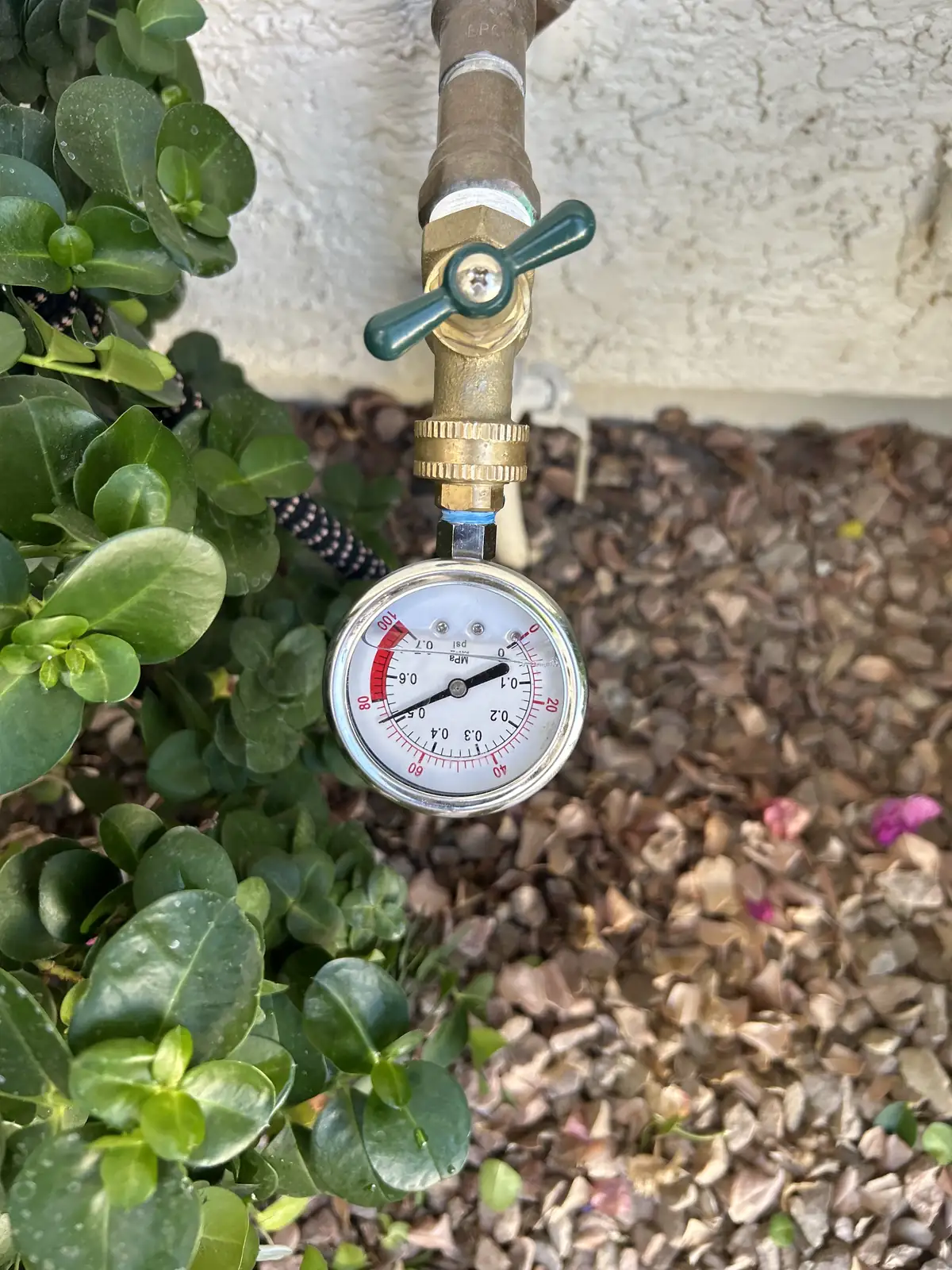
Buy a water pressure gauge that screws onto a hose bib
- 02
Pick a bib close to where the water comes into the house
- 03
Turn off anything using water inside, including the irrigation
- 04
Screw the gauge on, open the bib fully, and read it
- 05
Read it again in the evening and early morning, because supply pressure moves through the day
What the reading means
- Under 40: low. Fixtures feel weak, and something is restricting or the supply is genuinely low
- 40 to 80: the normal band
- 80 to 100: too high. Code wants a regulator, and your fixtures are paying for it
- Over 100: high enough to shorten the life of the heater, the valves, the connectors and the appliances
- A reading that climbs when nothing is running: pressure with nowhere to go, which points at expansion
What high pressure quietly costs you
- Water heaters that fail early, and relief valves that weep
- Supply connectors and toilet fill valves that give out
- Faucet cartridges that drip long before they should
- Banging pipes, because fast water stops hard
- Appliance valves that fail, which is where the expensive floods come from
Quick reference
| Reading | What it means |
|---|---|
| Below 40 psi | Low. Worth finding out why before adding anything. |
| 40 to 80 psi | The band fixtures are designed for. |
| Above 80 psi | Code calls for a regulator. Fixtures wear faster. |
| Above 100 psi | Hard on the whole house. Worth acting on. |
| Rises when the heater runs | Thermal expansion with nowhere to go. |
From the job log
Work we’ve done
Answers
Can I install a pressure regulator myself?
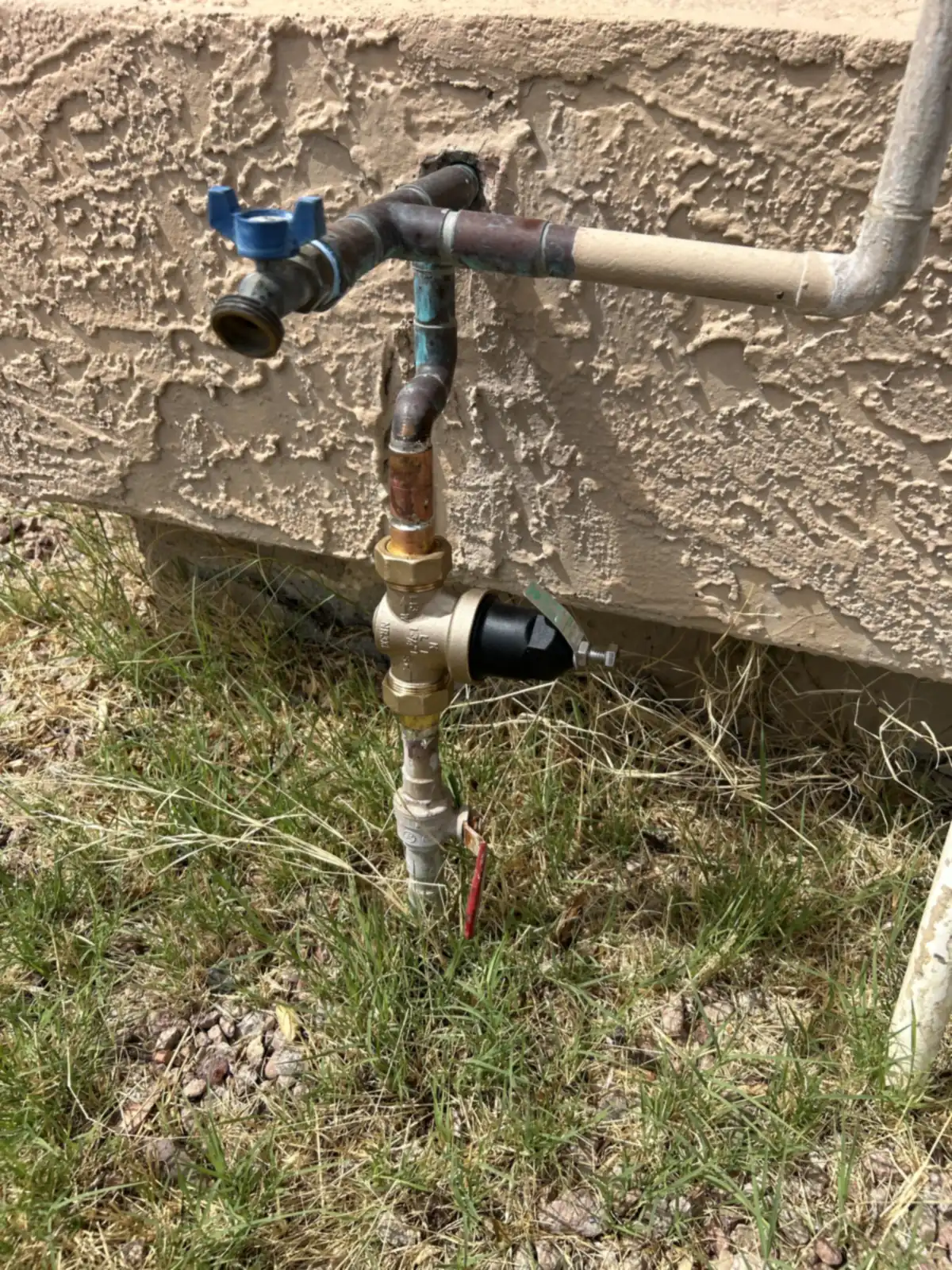
It sits on the main supply, so getting it wrong affects the whole house and the isolation has to be right. It is a straightforward job for a plumber and an awkward one to learn on.
My pressure was fine last year. Can it change?
Yes. Regulators wear out, and they usually fail by letting pressure climb. That is why a gauge is worth owning rather than borrowing once.
Is low pressure a leak?
It can be, and it can also be a partly closed valve, a failing regulator or a blocked aerator. Measuring at the hose bib separates a house wide problem from a single fixture.
If you need this done
- Water pressure and regulatorsPressure checked with a gauge, and regulators repaired or replaced when the house is getting more than the plumbing should take.
- Valves, hose bibs and water hammerShutoffs that won't turn, washer valves, outdoor hose bibs, and arrestors for pipes that bang when a valve closes.
- Pipe and leak repairDamaged, corroded or leaking pipe repaired or replaced, including hidden leaks behind walls, with as little disruption as possible.
- Where we workEvery town and ZIP across the Valley we cover.
In-home estimate
Rather have someone look at it? Tell us what's going on
We come out, look at the problem and explain what it needs before any work starts. For something urgent, calling is fastest.
Rather talk? Call or text (602) 833-4133.